Introduction:
Online casinos use many types of Safe Payment systems, but not all are equally safe or trustworthy. This article explains how common payment methods work, what risks users should be aware of, and how to protect personal and financial information. The purpose is purely educational, focusing on safety, legality, and responsible gambling awareness—not encouraging anyone to gamble.
Table of Contents
Why Understanding Payment Methods Matters
Payment systems can affect how securely funds move online. Knowing the differences helps users avoid scams, understand legal obligations, and make safer decisions when interacting with any online financial or gaming platform.
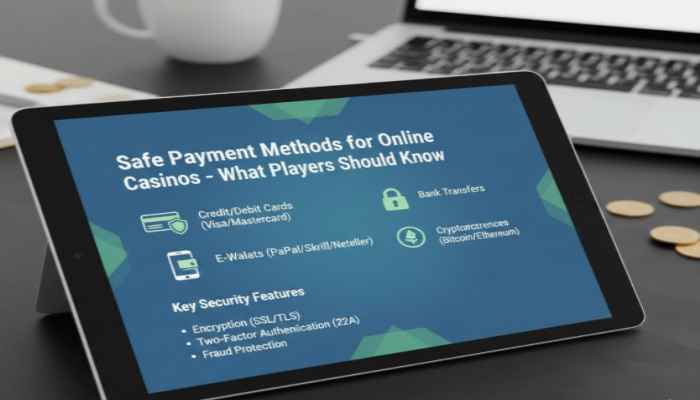
Common Safe Payment Methods (Neutral Overview)
Credit and Debit Cards
Widely used financial tools with fraud protection. Users should ensure their card provider supports secure online transactions and has strong chargeback policies.
2. E-Wallets (PayPal, Skrill, Neteller, etc.)
E-wallets act as a middle layer, protecting your bank information. They often include two-factor authentication and transaction limits.
3. Bank Transfers
Direct transfers between banks. Although slower, they are heavily regulated and traceable, making them safer when used on legitimate websites.
4. Prepaid Cards & Vouchers
These offer anonymity and limit spending. However, they must be purchased through trusted vendors to avoid counterfeit or expired cards.
5. Cryptocurrency (Educational Explanation Only)
Some platforms accept crypto for fast, borderless transactions. However, crypto is volatile, can be misused for fraud, and is not recommended for inexperienced users.
How These Payment Methods Work (Educational Explanation Only)
Encryption & Security Layers
Secure websites use SSL/TLS encryption to protect data sent between users and the payment processor.
Verification Procedures
Most reputable financial systems require identity verification (KYC) to prevent fraud and money laundering.
Transaction Monitoring
Banks and payment providers track suspicious activity and may freeze transfers that look risky.
Risks, Disadvantages, and Safety Warnings
1. Data Theft & Phishing Scams
Unverified casinos or fake websites can steal card details or personal information.
2. Delayed or Blocked Withdrawals
Unregulated platforms may hold funds or refuse payouts altogether.
3. Hidden Fees
Some payment methods include extra charges for international transfers, withdrawals, or currency conversion.
4. Cryptocurrency Risks
Crypto transactions are irreversible. If funds are sent to a scammer, there is no recovery.
5. Over-Spending Risks
Easy digital payments can encourage overspending. Users should always set strict limits.
Legal Considerations in Different Regions
Laws vary across countries:
Europe
Many EU countries require casinos to follow strict financial rules, including AML (Anti-Money Laundering) regulations and KYC checks.
United States
Payment options vary by state. Some states block gambling-related transactions under federal laws.
Asia & Middle East
Regions like the UAE and Qatar have strict bans. Some countries allow online gaming only through state-licensed operators.
South Asia (Including Bangladesh, India, Sri Lanka)
Regulations differ widely. Some areas lack clear online gambling laws, which can increase risks for users.
Always check local laws before engaging in any payment or gaming activity.
Responsible Gambling Advice (18+ Reminder)
If someone chooses to use gaming websites:
- Must be 18+ or legal age in their region
- Set financial limits
- Avoid using borrowed money
- Keep gambling as entertainment, not income
- Seek help if gambling becomes difficult to control
- Never share personal or bank information with unverified sites
For support, international organizations like GamCare, Gambling Therapy, and BeGambleAware provide free help.
Also Chack: The Psychology of Gambling Addiction & Early Help Guide 2025
Conclusion
Safe payment methods are essential for protecting personal information and financial security. This guide provides educational insight into how different systems work, potential risks, legal considerations, and responsible gambling reminders. Understanding these factors helps users make safer decisions online—without promoting or encouraging gambling.
Related FAQs
1. What is the safest payment method for online casinos?
Regulated methods like bank transfers and well-established e-wallets are generally considered safer because they use strong security protocols.
2. Are cryptocurrencies safe for online casino payments?
They offer fast transfers but come with volatility and fraud risks. Beginners should be cautious.
3. How can I tell if a website’s payment system is secure?
Look for SSL certificates (https), licensing information, and trusted payment logos.
4. Can my bank block casino payments?
Yes. Some banks block or delay gaming-related transactions depending on local laws.
5. What should I do if a casino refuses to pay out?
Contact customer support, document everything, and escalate to a regulatory authority if the site is licensed.