Children & Teens Online: Preventing Underage Gaming and Gambling Exposure
Introduction:
The digital world gives young people access to games, entertainment, and social platforms. However, it also exposes them to gambling-style features, gaming loot boxes, and online betting ads.
This article is meant only for education, awareness, and safety guidance. It does not promote gambling. Instead, it explains how underage exposure happens, why it is risky, and how families can protect minors.
Table of Contents
Why Children and Teens Are Vulnerable Online
Young users spend significant time on mobiles, tablets, games, and social media. Many platforms include features that resemble gambling, even if not labeled as such.
These include:
- Random-reward systems (loot boxes)
- Social casino games
- Influencer content showing casino-style games
- Online ads that children may click unintentionally
Because children and teens are still developing decision-making skills, they are more likely to be influenced by such content.
Understanding Gaming Features That Resemble Gambling
Even though many games do not involve real money, some mechanics follow gambling-like patterns.
Loot Boxes & Random Rewards
Loot boxes offer random virtual items.
They are similar to gambling because the outcome is:
- Based on chance
- Often paid for with real money
- Rewarding with a prize of unknown value
Social Casino Games
These are games that look like slots, roulette, or card games but use virtual currency instead of cash.
Even though no real-money payouts exist, the visual style may normalize gambling behavior.
Also chack: How to Detect Rigged Slots or Unfair Online Casino Games Guide
“Pay-to-Win” Mechanics
Kids may feel pressured to spend money to get stronger characters or advantages.
This pressure can lead to unhealthy spending habits later.
Risks and Dangers of Underage Exposure
1. Addiction and Compulsive Behavior
Chance-based rewards can activate the brain’s reward system, similar to gambling.
2. Financial Risks
Kids may:
- Spend money without understanding value
- Use parents’ cards without permission
- Fall for fake gaming or scam websites
3. Normalization of Gambling
Early exposure may make teens believe gambling is harmless entertainment.
4. Privacy and Security Issues
Unverified apps and websites often collect personal information, which is unsafe for minors.
Legal Considerations Around the World
Europe
Many EU countries regulate loot boxes under consumer protection laws.
Online gambling is restricted to 18+, with ID checks required.
United States
Federal law restricts gambling to adults, though enforcement varies by state.
Some states have begun examining loot box mechanics for child safety.
United Kingdom
Loot boxes are under ongoing review, and online gambling is strictly 18+ with mandatory verification.
Asia-Pacific
Countries like Japan, China, and South Korea have restrictions on “gacha” systems and strong minor-protection laws in gaming.
Regardless of region, minors are legally prohibited from real-money gambling.
How Parents & Guardians Can Reduce Exposure
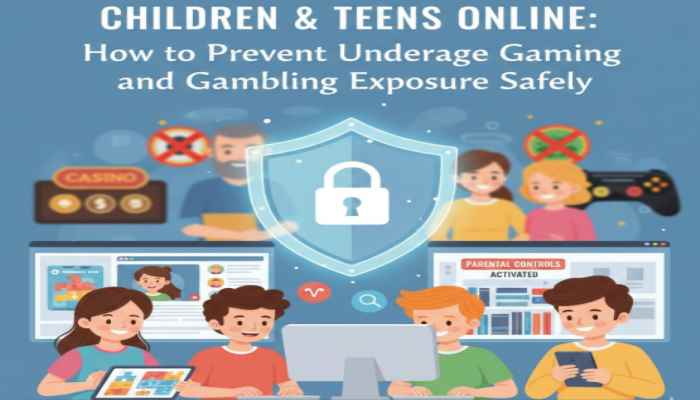
1. Use Parental Controls
Tools from Google Play, Apple, PlayStation, Xbox, and others allow:
- Spending limits
- Age restrictions
- Blocking gambling-related apps
- Monitoring playtime
2. Educate Children About Risks
Explain:
- Not everything online is safe
- Chance-based games can lead to unhealthy behaviors
- Real-money gambling is for adults only
3. Check Game Age Ratings
Look for labels like:
- ESRB
- PEGI
- Google Play Family guidelines
4. Disable In-App Purchases
This prevents accidental or unauthorized spending.
5. Encourage Healthy Screen Habits
Balance gaming with offline activities such as sports, reading, and hobbies.
Reminder: Gambling Is Strictly for Adults (18+)
Real-money gambling is never appropriate for children or teens.
Educational conversations can help young users make responsible decisions as they grow older.
Conclusion: Protecting Young Users Through Awareness
Children and teens face an increasingly complex online environment. By understanding how gaming systems work, knowing the risks, and using proper controls, families can significantly reduce underage exposure to gambling-like content.
Protecting minors is a collective responsibility—parents, educators, platforms, and regulators must work together to keep online spaces safe.
FAQs
1. Are loot boxes considered gambling?
Not always, but they share gambling-like features. Regulations differ by country.
2. Can teens accidentally access gambling websites?
Yes. Poorly filtered ads, pop-ups, or unsecured devices may lead them to unsafe sites.
3. Do social casino games pay real money?
No. They use virtual currency, but they can still normalize gambling behaviors.
4. What age is allowed for real-money gambling?
In most countries, 18+ is the legal minimum.
5. How can parents block gambling apps?
Using parental control tools on app stores, consoles, routers, and mobile devices.