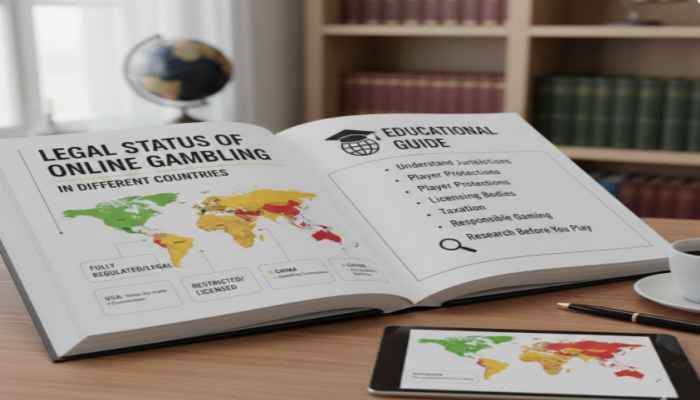
Online gambling is available on the internet in many forms, such as online casinos, sports betting platforms, and lottery websites. However, its legal status is very different from one country to another.
This article is written for educational and informational purposes only. It does not promote gambling, encourage betting, or recommend any gambling platforms. The goal is to help readers understand how online gambling laws work globally, the risks involved, and why knowing local regulations is important.
Table of Contents
What Is Online Gambling?
Online gambling refers to games or activities where people place money or items of value on uncertain outcomes using internet-based platforms. Common examples include:
- Online casino games
- Sports betting websites
- Online poker rooms
- Digital lottery services
Most countries regulate these activities because they involve financial risk, consumer protection concerns, and potential harm.
How Online Gambling Laws Work
Who Controls Gambling Laws?
Online gambling laws are usually controlled by:
- National governments
- Regional or state authorities
- Regulatory agencies
These bodies decide:
- Whether online gambling is legal or illegal
- Who can operate gambling platforms
- How players are protected
- How taxes and licenses work
Why Laws Differ by Country
Countries have different laws due to:
- Cultural attitudes toward gambling
- Religious beliefs
- Economic policies
- Public health concerns
- History of gambling regulation
Legal Status of Online Gambling by Region
Europe
Many European countries regulate online gambling rather than banning it.
Common approach:
- Licensed operators only
- Strong consumer protection rules
- Age verification (18+)
- Responsible gambling controls
Examples:
- United Kingdom: Legal and regulated
- Germany: Legal with strict rules
- France: Partially legal (some games restricted)
North America
United States
- Laws vary by state
- Some states allow online casinos or sports betting
- Other states prohibit most forms
Canada
- Government-run online gambling is legal
- Private operators exist in legal gray areas
Asia
Asia has very mixed regulations.
- Some countries strictly ban online gambling
- Others allow limited or government-controlled services
Examples:
- Japan: Mostly restricted
- Singapore: Highly regulated
- Philippines: Licensed operators allowed under regulation
Middle East
Most Middle Eastern countries prohibit online gambling due to religious and legal reasons.
- Strict bans
- Strong penalties in some regions
Africa
African countries are increasingly regulating online gambling.
- Some allow licensed operators
- Others lack clear regulations
Legal clarity varies widely by country.
Australia & New Zealand
- Australia: Legal but tightly regulated
- New Zealand: Government-operated platforms allowed; foreign operators restricted
Legal Risks and Disadvantages
Potential Legal Consequences
Using online gambling platforms where they are illegal may lead to:
- Fines
- Account bans
- Legal penalties
Financial Risks
- Loss of money
- Lack of consumer protection on unlicensed sites
- Difficulty withdrawing funds
Privacy and Security Risks
- Data misuse
- Fraud or scams
- Weak security on illegal platforms
Why Legal Awareness Is Important
Understanding the legal status in your country helps you:
- Avoid breaking the law
- Recognize unsafe or illegal platforms
- Understand your consumer rights
- Make informed decisions
Responsible Gambling Awareness (18+ Only)
Online gambling always involves risk and should never be viewed as a way to earn money.
Key reminders:
- Gambling is for adults aged 18 or older (or legal age in your country)
- Never gamble with money you cannot afford to lose
- Avoid gambling under stress or emotional pressure
- Seek professional help if gambling becomes a problem
If gambling negatively affects your life, contact local support organizations.
Also Chack: Understanding Gambling Risks: Why Guaranteed Wins Don’t Exist
Frequently Asked Questions (FAQs)
1. Is online gambling legal worldwide?
No. Laws vary greatly by country and sometimes by region within a country.
2. Can I use foreign gambling websites legally?
That depends on your local laws. In some countries, accessing foreign sites may be restricted or illegal.
3. Why do some countries ban online gambling?
Common reasons include consumer protection, addiction concerns, cultural values, and financial regulation.
4. Is online gambling safer in regulated countries?
Regulated markets usually offer better consumer protections, but risks still exist.
5. How can I check my country’s gambling laws?
Consult official government websites or legal authorities for accurate information.
Conclusion
The legal status of online gambling differs significantly across countries and regions. While some governments regulate it strictly, others prohibit it entirely. Understanding these laws is essential for legal awareness, personal safety, and responsible decision-making.
This article aims to provide neutral, educational information only, helping readers understand global gambling laws without promoting participation. Always follow local regulations and prioritize responsible behavior.